More Than Mobility: How Physical Therapists Help Create Better Wheelchair Outcomes

Every October, National Physical Therapy Month recognizes the physical therapists and physical therapist assistants who help people improve movement, function and participation throughout life. For individuals who use wheelchairs, the physical therapist’s role can extend well beyond exercise or rehabilitation. PTs may also contribute clinical insight during the evaluation and selection of a wheelchair and seating system.
A wheelchair is not simply a way to move from one place to another. It can influence posture, comfort, access to daily activities and the ability to participate at home, at school, at work and in the community. Finding the right solution requires an understanding of the whole person, including physical needs, routines, environments and goals.
Looking Beyond the Wheelchair Frame
During a wheelchair and seating evaluation, a physical therapist may consider factors such as range of motion, strength, balance, posture, skin integrity, endurance and the person’s ability to propel or operate the chair. The evaluation may also look at transfers, transportation, caregiver involvement, home accessibility and the activities that matter most to the individual.
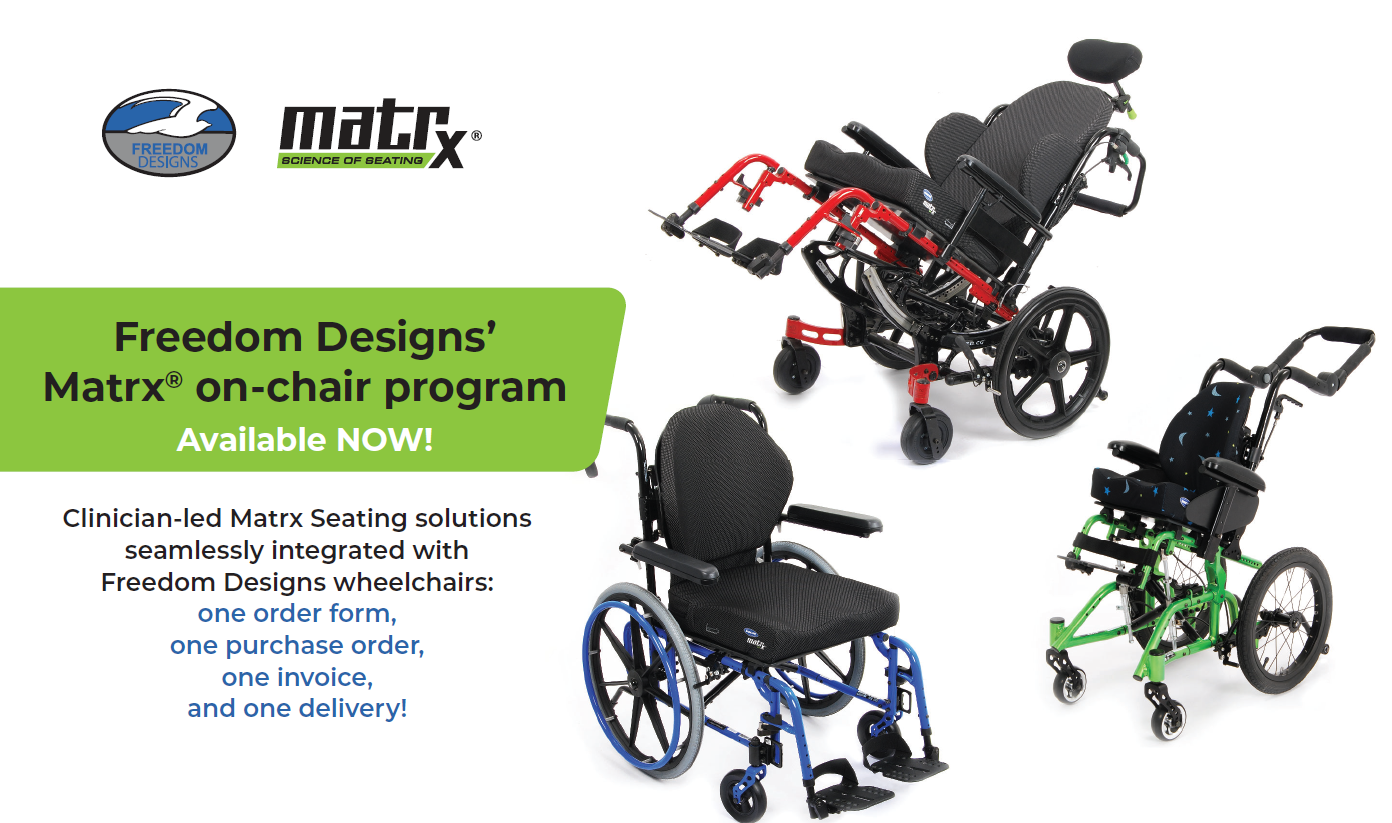
These details help the team identify a mobility base and seating configuration that support the person’s functional needs. Depending on the individual, the solution may involve a folding or rigid wheelchair, tilt-in-space capabilities, customized seat and back support, head positioning, pelvic or trunk supports, or lower-extremity positioning components.
Freedom Designs offers a range of wheelchairs, seating and positioning solutions, and accessories and hardware that can be configured to address a variety of mobility and support needs.
A Collaborative, Person-Centered Process
Choosing the right wheelchair is a team effort, with the individual’s needs and goals guiding the process. The team may include the wheelchair user, family members or caregivers, a physical therapist, an occupational therapist, an assistive technology professional, a physician and an equipment provider.
Everyone brings something valuable to the conversation. The wheelchair user and family understand daily routines and priorities, while the PT provides insight into movement, posture and function. The ATP and equipment provider help determine which products and features may be the right fit. By working together, the team can consider comfort, accessibility, adjustability, transportation and future needs.
Matching the Solution to Everyday Life
A wheelchair may perform well in a clinic but still needs to work in the places where life happens. That is why PTs often ask practical questions during the evaluation process:
- Where will the wheelchair be used most often?
- How will it be transported?
- What types of transfers are needed?
- Which school, work, family or community activities should it support?
- Could the user’s size, condition or positioning needs change over time?
- What training will the user and caregivers need?
The answers can shape decisions about frame style, seat dimensions, wheel configuration, adjustability and positioning components. For example, the Freedom NXT Folding Tilt-in-Space Wheelchair combines tilt-in-space functionality with a lightweight, folding design and adjustment options for pediatric and adult users. The right choice, however, always depends on an individualized evaluation and the recommendations of the care team.
Fit Is a Process, Not a One-Time Event
Delivery is an important milestone, but it is not the end of the process. Proper fitting, user and caregiver training, and follow-up all help the equipment work as intended. Adjustments may be needed as a child grows, routines change, physical needs evolve or new activities become important.
Physical therapists can help monitor how the wheelchair and seating system are functioning over time. They may identify changes in posture, comfort, transfers or mobility that should be discussed with the broader equipment team. Regular communication helps keep the solution aligned with the user’s current needs.
Recognizing Physical Therapists This October
National Physical Therapy Month is an opportunity to recognize the clinical knowledge, careful observation and collaboration that PTs bring to mobility care. Their work helps connect equipment choices to real-world goals, supporting not only movement, but also comfort, participation and greater independence.
At Freedom Designs, we are proud to support the clinicians, ATPs, providers, families and wheelchair users who work together to find meaningful mobility solutions.
Ready to Learn More about Freedom Designs?
Call: (833) 987-5800
Contact Us
Request a Quote
Not Sure Where to Start?
It looks like Javascript isn't enabled in your browser. Please enable it in order to fill out this form.